Plan for the busiest hour, not the guest list
An invitation list says how many people were asked. Restroom demand depends on how many are on the grounds together and how synchronized they are. A craft fair where 2,000 visitors drift in over eight hours produces a gentle, steady trickle. A wedding ceremony that breaks for cocktails at one moment, or a fun run where everyone arrives forty-five minutes before the start gun, produces a spike, and the line that forms during that spike is what people talk about afterward.
The four inputs that move the number
Peak headcount. The most people you expect on site at one time. Count staff, vendors and volunteers as well as guests, because they use the same facilities unless you provide separate ones.
Length of the event. A longer day means more visits per person even when the crowd never grows. Beyond roughly four hours the numbers climb noticeably.
Alcohol. Beer gardens, wine pours and open bars raise usage. A margin of about a quarter on top of a dry event is a sensible starting assumption.
Food. A seated meal tends to send people to the restroom in waves, and any food service makes handwashing a priority rather than a nicety.
A rule of thumb you can sanity-check
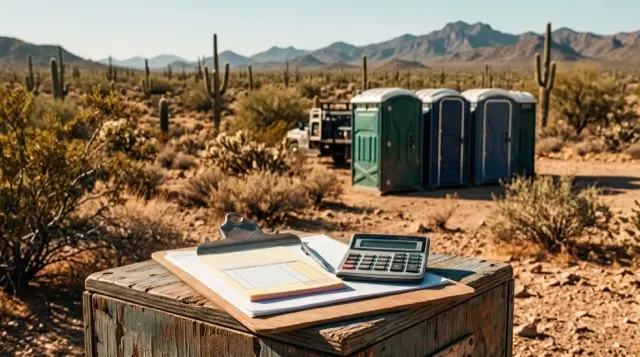
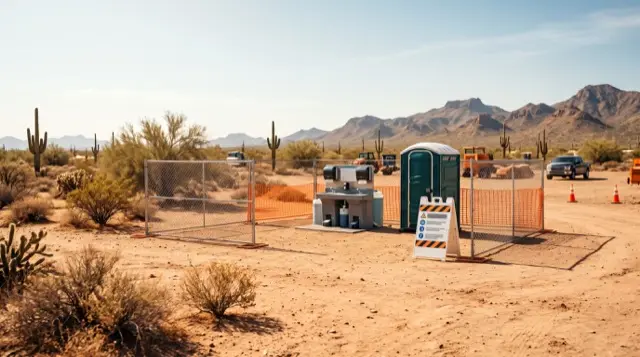
Many event planners begin with about one portable toilet for every 50 guests at an event of up to four hours. Our rental calculator then scales that figure: no change up to four hours, about 25 percent more up to eight hours, about 50 percent more beyond that, a further 25 percent if alcohol is served and 10 percent more if there is a meal. For handwashing, a common guide is one handwashing station for every four toilets, with at least one at any food area. These are planning heuristics only. Your venue, permit office or health department may require more, and nothing here is a legal minimum.
Three worked examples
- Charity 5K, 600 people at peak, three hours, snacks only. 600 divided by 50 is 12, with no scaling for a short dry event. Plan about a dozen toilets, three handwashing stations and accessible units near the start line, where the pre-race surge happens.
- Backyard quinceañera, 150 guests, six hours, dinner served. The base figure is 3. Scaling for length and the meal gives roughly 5. Add alcohol and it moves toward 6. Two handwashing stations, one near the units and one near the food, cover the setup.
- Weekend craft fair, about 300 people on the grounds at any moment, eight hours per day. The base is 6, and the longer day lifts it to about 8. Plan per day rather than for the whole weekend and discuss servicing between days.
Mistakes that cause long lines
- Sizing to the invitation list instead of peak attendance.
- Forgetting that vendors, crew and volunteers need facilities too.
- Putting every unit in one bank at the edge of the property.
- Ignoring accessibility until the week of the event.
- Assuming a hot afternoon will not change behavior. In Arizona heat people drink more and visit more.
Do not forget the add-ons
- Accessible units. For public events include at least one, on a firm, level route. See the accessible restroom planning guide.
- Separate staff and vendor units. They keep guest lines short and keep vendors productive.
- A small cushion. If one unit has a problem, the line should not double.
- Lighting. Desert dark falls fast, and evening events need lit paths and lit unit doors.
Placement matters as much as quantity
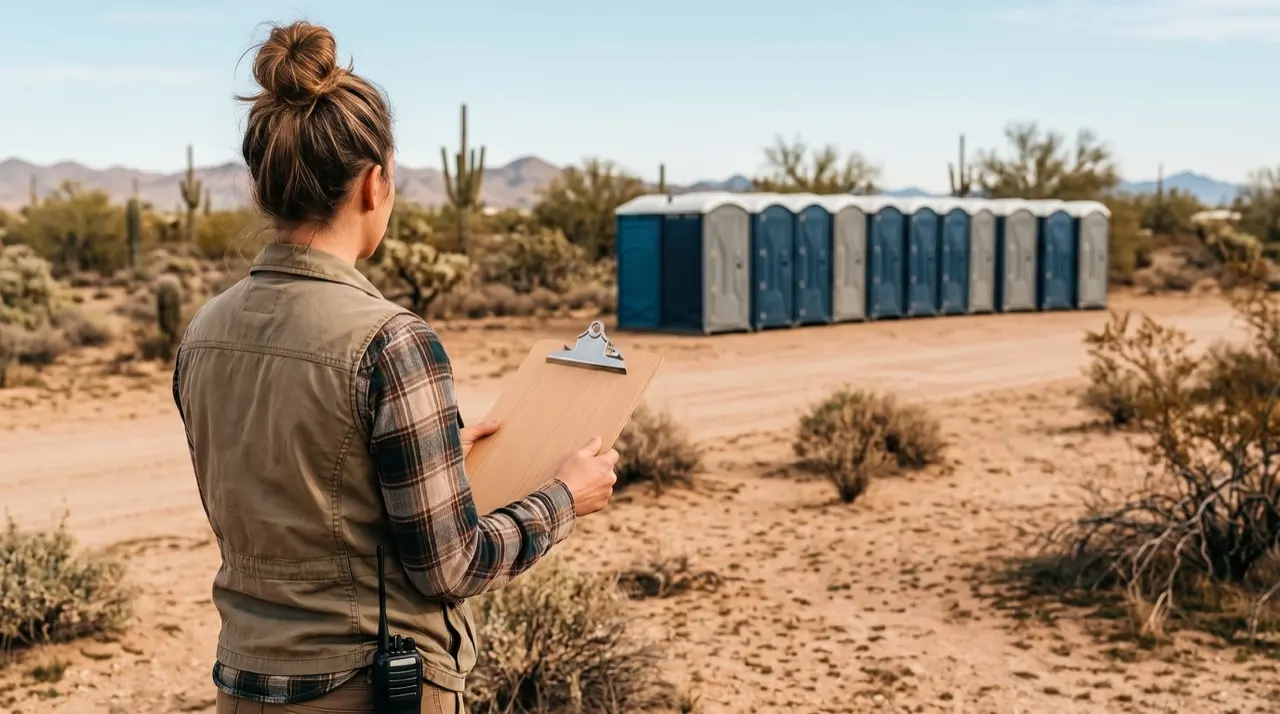
Two clusters of five near the activity beat one bank of ten at the far edge. Spread units across entrances, food areas and the main gathering space, keep them visible, and leave room for a line to form without blocking a walkway or a fire lane.
Special situations
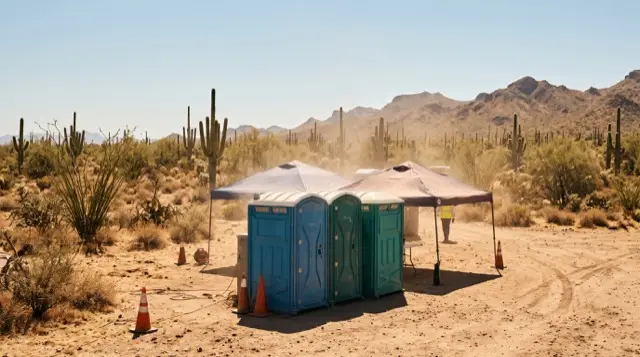
Stadium-area tailgates behave differently from backyard parties; see the spring training and tailgate guide. Remote desert events add servicing distance and access challenges, covered in the trailhead and off-road guide. Work sites are sized by crew and regulation instead of guest ratios, so read the construction sanitation guide.
What to bring to the call
Have your peak headcount, hours, whether food or alcohol is involved and any venue rules ready, then call for a quote. We will review your estimate with you and adjust it for your site.
Last updated October 13, 2026. This guide is general information, not legal, engineering or regulatory advice.