Why tailgates need their own plan
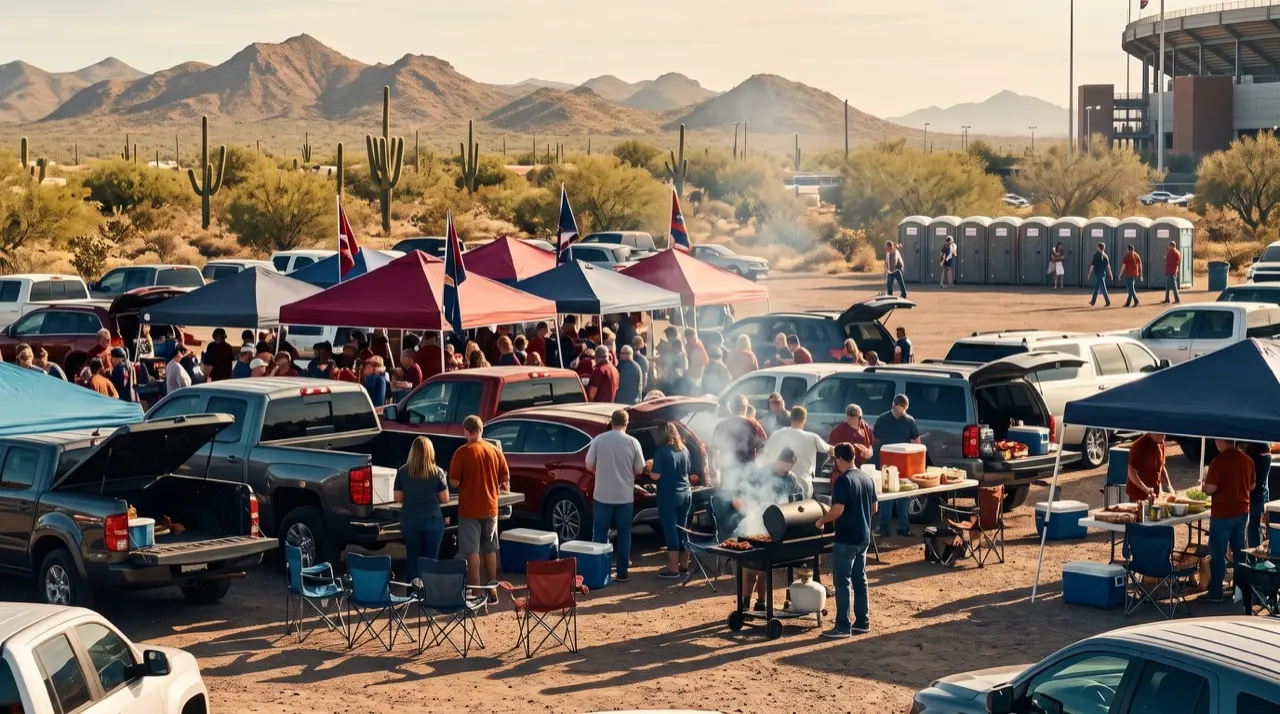
Cactus League spring training brings baseball fans to the Phoenix area through February and March, and many of them arrive hours before first pitch. Stadium restrooms sit inside the gates and are shared with ticket holders. A tailgate in a nearby lot, on a field or in a company's parking area is outside that system entirely, so the host becomes responsible for restrooms, whether or not anyone planned it that way. This guide is general planning advice and does not imply any connection to a team, league or ballpark.
Get the lot owner on board first
Before you order anything, confirm who controls the space. Parking lots are often private, owned by a business, church, school or the city, and the owner decides whether equipment may be placed there, for how long and where. Ask the owner these questions:
- May portable restrooms be placed in the lot, and in which area?
- Are there fire lanes, drainage areas or accessible parking spaces that must stay clear?
- When may a truck enter and leave on game day?
- Is there a permit, insurance or paperwork requirement for the event?
Cities and neighborhoods near ballparks may also have rules on gatherings, alcohol, noise and street parking, so check locally.
Understand how crowds arrive
Tailgate demand has a clear shape. Use builds as people arrive and settle in, spikes in the hour before the game as some walk to the stadium, drops during the game for anyone staying behind and surges again afterward. Plan for the busiest of those windows rather than the average, and put units where people already gather, such as near the food setup or the main group of vehicles.
A worked example
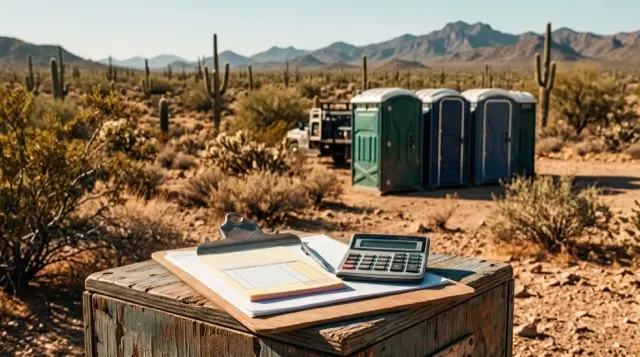
Suppose a community group hosts a tailgate for about 400 people over five hours with food and drinks that include beer. Starting with one unit per 50 people gives eight. Because the event runs past four hours, the calculator logic raises that by about a quarter to ten, alcohol adds another quarter to about twelve and a meal adds a little more, landing near fourteen units. Add at least one accessible unit and about four handwashing stations. Try your own numbers in the calculator and read the unit-count guide for the reasoning.
Layout in a parking lot
- Cluster units in two or three groups instead of one distant block.
- Keep fire lanes, driveways and accessible parking clear.
- Leave room for a service truck to reach every unit.
- Place handwashing at the exit side of each cluster and next to any food.
- Choose a spot that will still be reachable after cars fill the lot, and tell the driver exactly where.
Accessibility on asphalt
Parking lots are usually firm and level, which helps, but accessible units still need to sit close to accessible parking with clear turning space. See the accessible restroom planning guide for placement details, and remember that a unit blocked by parked vehicles is not accessible.
Timing, booking and delivery
February and March weekends fill up quickly across the Phoenix area because many groups plan gatherings around game days. Call as soon as your date is set, and schedule delivery before early arrivals begin. Pickup should happen after the lot clears, so agree on a window the owner is comfortable with. The delivery and pickup page explains what to prepare.
Heat, shade and evening games
Late March afternoons can turn hot, and a plastic unit baking in open asphalt gets uncomfortable fast. Place units near the shaded side of a building or a row of trees if the lot allows it. For evening games, add lighting near the units, since a lot gets dark quickly. Wind can also push dust and loose items around open lots.
Multi-game weekends and tournaments
Youth tournaments and multi-day fan events usually need mid-event servicing, especially for alcohol and food-heavy gatherings. Talk through when a truck can reach the units between games, and keep a clear lane for it. For larger public events, the event rentals page and festival rentals page describe how bigger crowds change the plan.
Be a good neighbor
Keep trash contained, keep units away from neighboring homes and doors, and leave the lot cleaner than you found it. Good behavior helps owners say yes next season.
What to tell us when you call
The lot or field location, who controls it, expected headcount at the peak, hours, whether alcohol and food are involved and any access or permit conditions. Then call for a quote and we will help you plan a layout that keeps lines short.
Last updated October 13, 2026. This guide is general information, not legal, engineering or regulatory advice.