Why plan early
Accessible units are larger than standard ones and are often less plentiful in inventories, so they can book out for popular dates. Mention them on your first call rather than as an afterthought, especially for weekends in the busy season from fall through spring.
Think of it as a route, not a unit
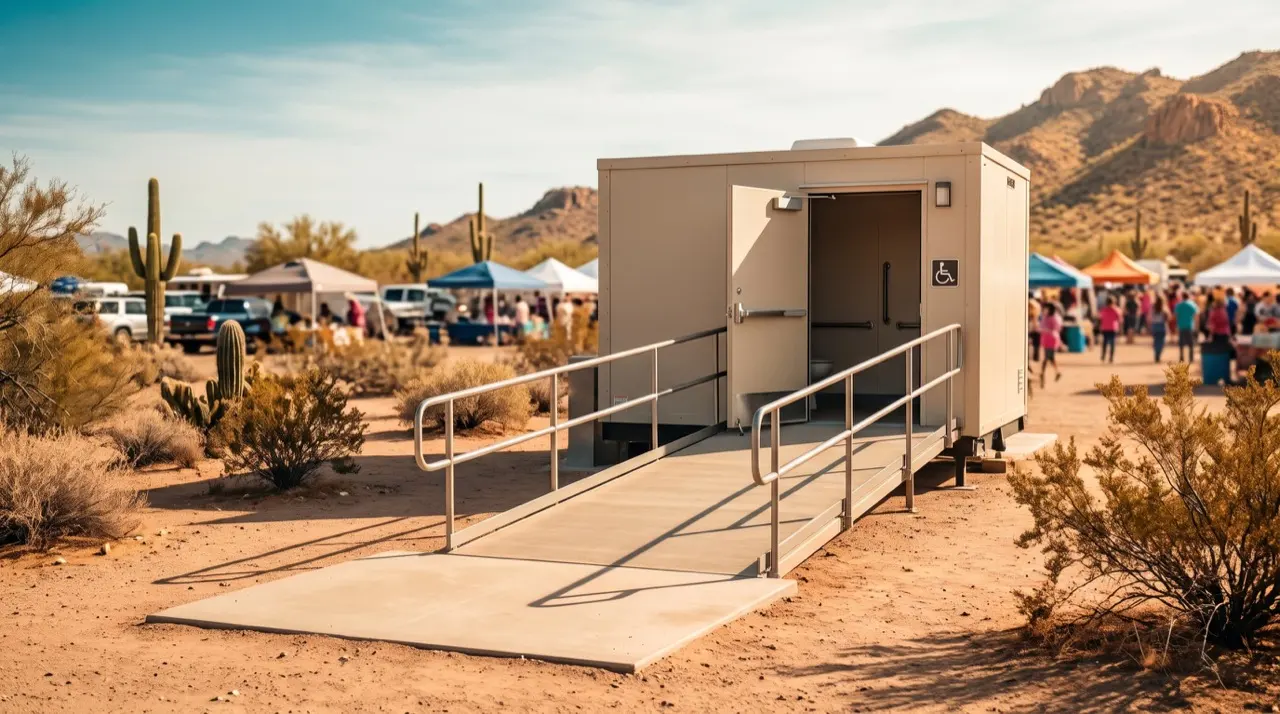
An accessible portable restroom is only part of the picture. A person arriving at your event needs a way to get from parking to the unit, a surface they can roll or walk on and enough space to turn at the door. If any link in that chain fails, the unit might as well not be there.
Know who sets your requirements
Whether you must provide accessible facilities, and how many, depends on the event type, whether it is public, the venue and local rules. Your city or county permit office, venue manager or an accessibility professional can say what applies. We cannot give legal advice, but we can price the quantity you decide on.
The surface under the route
- Best: pavement, concrete or firmly compacted material.
- Risky: loose gravel, decomposed granite that has not been compacted, deep sand, tall grass and ruts left by vehicles.
- Seasonal: monsoon rain can soften a desert lot that was firm in May, and dry weather kicks up dust that makes a route slippery. Choose a route that works in both conditions.
Event mats or temporary pathways can bridge a soft stretch if the venue allows them. Ask early, because they take time to arrange.
Placement checklist
- As close as practical to accessible parking and the main activity.
- On level ground, away from slopes and cross-slopes.
- With clear turning space in front of the door.
- Along a route free of cords, hoses, barricades and steps.
- Lit, if the event runs after dark.
- Marked with clear signs from the main paths.
Add handwashing the same way
If you provide handwashing, make sure at least one station is positioned and designed for use from a mobility device, and set it beside the accessible unit. See handwashing stations to ask about options.
Different events, different priorities
- Festivals and fairs: put accessible units in more than one cluster so nobody has a long walk. See festival rentals.
- Weddings: think about older relatives and the distance from ceremony to units. The wedding planning guide has more.
- Races and tailgates: place accessible units near the start line, finish line or the lot's accessible parking, not only at the margins. See the tailgate planning guide.
- Trailheads and desert events: access may be unpaved, so discuss realistic options with the land manager and see the trailhead guide.
- Work sites: if a worker or visitor needs an accessible option, say so when you call.
Common mistakes
- Placing the accessible unit last, at the far end of a gravel lot.
- Assuming a ramp solves everything while the approach is soft or sloped.
- Leaving the unit unlit and unmarked at an evening event.
- Forgetting to tell the delivery driver where the accessible unit goes.
Heat and distance
A long walk across hot ground is harder for everyone and especially hard for guests with limited mobility. In Arizona, shade along the route and a short path make a real difference.
What to tell us when you call
The surface at the site, the distance from parking to the unit's location, your expected attendance and whether you want accessible units alone or alongside standard ones. We will confirm what is available for your date, and the accessible rentals page explains what to expect. Share these details when you call for a quote and we will help you plan.
Last updated October 13, 2026. This guide is general information, not legal, engineering or regulatory advice.