What makes remote events different
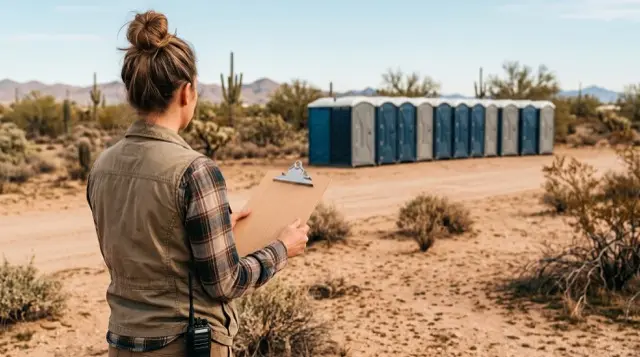
A trailhead start line or a desert staging area often has no pavement, no shade, no cell coverage and no nearby building. A truck must drive to you, and every detail you would normally handle by phone has to be settled in advance. The result is that remote events reward early planning more than any other kind.
Start with the land manager
Much of Arizona's open land is managed by agencies, including federal land managers such as the Bureau of Land Management and the Forest Service, state trust land, counties and cities. Each has its own rules on events, vehicles, equipment placement and timing. Check with the managing agency for your location before you plan restrooms, and ask these questions:
- Is a special-use or event permit required, and does it address restrooms?
- Where may vehicles drive and park, and which roads are open to a service truck?
- Are there restrictions on placing equipment near water, cultural sites or sensitive habitat?
- Are there seasonal closures or fire restrictions that could change the plan?
Washes, flash floods and weather
Washes are dry most of the year and dangerous when it rains, sometimes because of storms miles away. Keep units out of washes, away from their banks and off low ground, and pay attention to the monsoon window from June 15 to September 30. For crossings along the access road, ask whether the route can be used after heavy rain. The summer planning guide explains heat, dust and storm planning in more detail.
Roads, sand and rocks
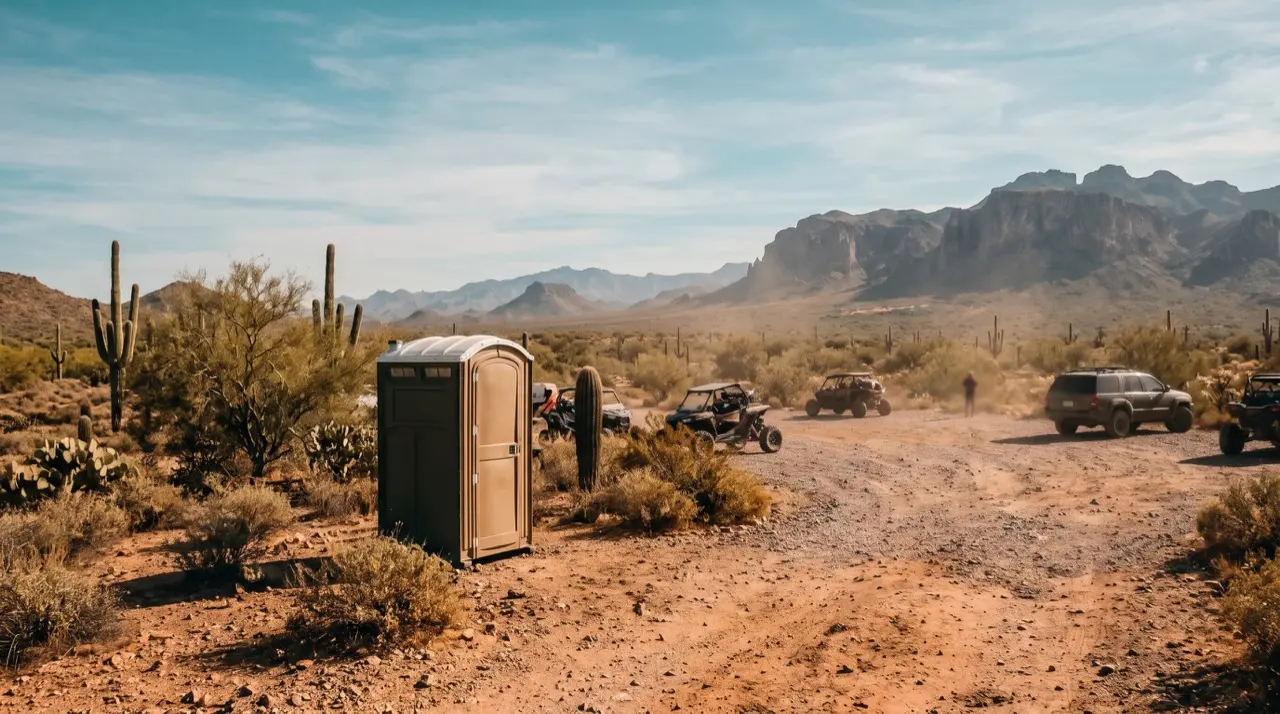
Describe the last stretch of road honestly: washboard, soft sand, rocks, steep grades, tight turns, gates, cattle guards or creek crossings. These details decide what vehicle can reach the site and whether units can be placed where you want them. A photo or a map pin saves a great deal of guesswork. Units need firm, level ground, so choose a staging spot that can support a truck and keep the approach clear of event vehicles.
No cell coverage
If coverage is spotty, agree on a plan in advance: a GPS pin sent ahead of time, a named person who will meet the driver at the nearest paved point and a backup phone number. Confirm the delivery window by phone the day before, and again at the start of the day if you can. Write down the plan so a volunteer with no signal can still follow it.
Sizing a remote event
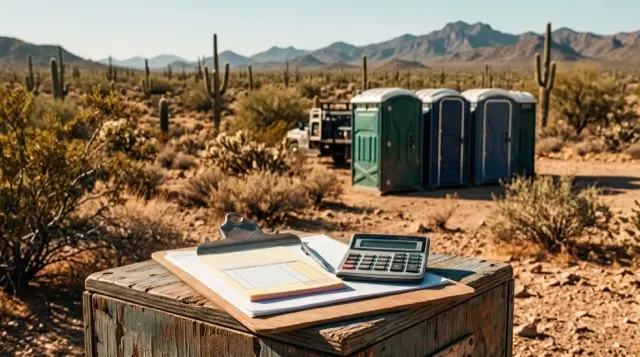
Use the same basic arithmetic as any event, then adjust for the environment. For about 250 participants over six hours with water and snacks but no alcohol, one unit per 50 people gives five, and the longer duration lifts it to about six. Remote starts usually concentrate use before the gun or the ride, so place most units near the start and a few at turnaround points or aid stations if the route allows servicing there. Add a handwashing station at each cluster, and run your numbers in the calculator or the unit-count guide.
Servicing distance
A remote site is a long drive from anywhere, so a mid-event service visit takes far more time than in a city. For single-day events, fewer, better-placed units and a pickup plan are usually enough. For multi-day rides or camps, discuss servicing early so the schedule fits the travel, and see long-term options for extended operations.
Heat, dust and shade
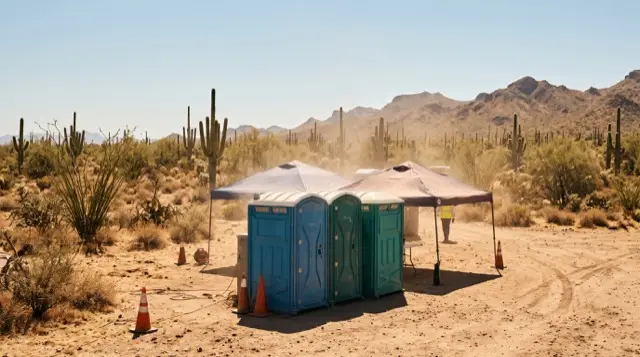
Desert sun is intense, and open sites rarely have shade. If you can place units near a rock face, a tree line or a temporary shade structure, do so. Dust storms can reduce visibility quickly and cover everything, so keep a margin in delivery and pickup times. Tell participants where water, shade and restrooms are before they start.
Wildlife and leave-no-trace
Desert areas are home to wildlife, including snakes, javelina and insects, and they sometimes investigate equipment. Keep trash contained, keep food away from the units and leave the site as you found it. Land managers often require packing out everything you bring in, and tidy placement helps secure approval for future events.
Accessibility in rough terrain
Unpaved trailheads make accessible routes harder, but they still matter at public events. Talk with the land manager about what surfaces and mats are allowed and read the accessible restroom planning guide. The accessible rentals page explains what to ask for.
Other remote settings
Ranch weddings follow many of the same rules, so see the wedding planning guide. Construction crews on utility, solar or road projects face the same access and servicing questions, and the construction sanitation guide covers the regulatory side.
What to tell us when you call
The location as a map pin, the managing agency and any permit conditions, the road description, expected headcount, hours and whether you have cell coverage. Then call for a quote and we will talk through placement, delivery and servicing for your site.
Last updated October 13, 2026. This guide is general information, not legal, engineering or regulatory advice.