Why heat changes the plan
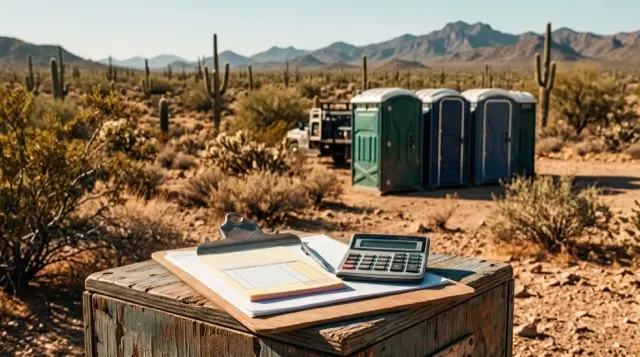
A closed plastic unit in direct sun gets very hot inside, heat intensifies odor, and even a short visit becomes unpleasant. In the Valley, Yuma, Lake Havasu City and other low-desert areas, summer afternoons can climb far above 100°F, so a setup that worked well in March may fail in July. High-country sites such as Flagstaff are cooler by day but bring their own surprises at night.
Practical steps for hot weather
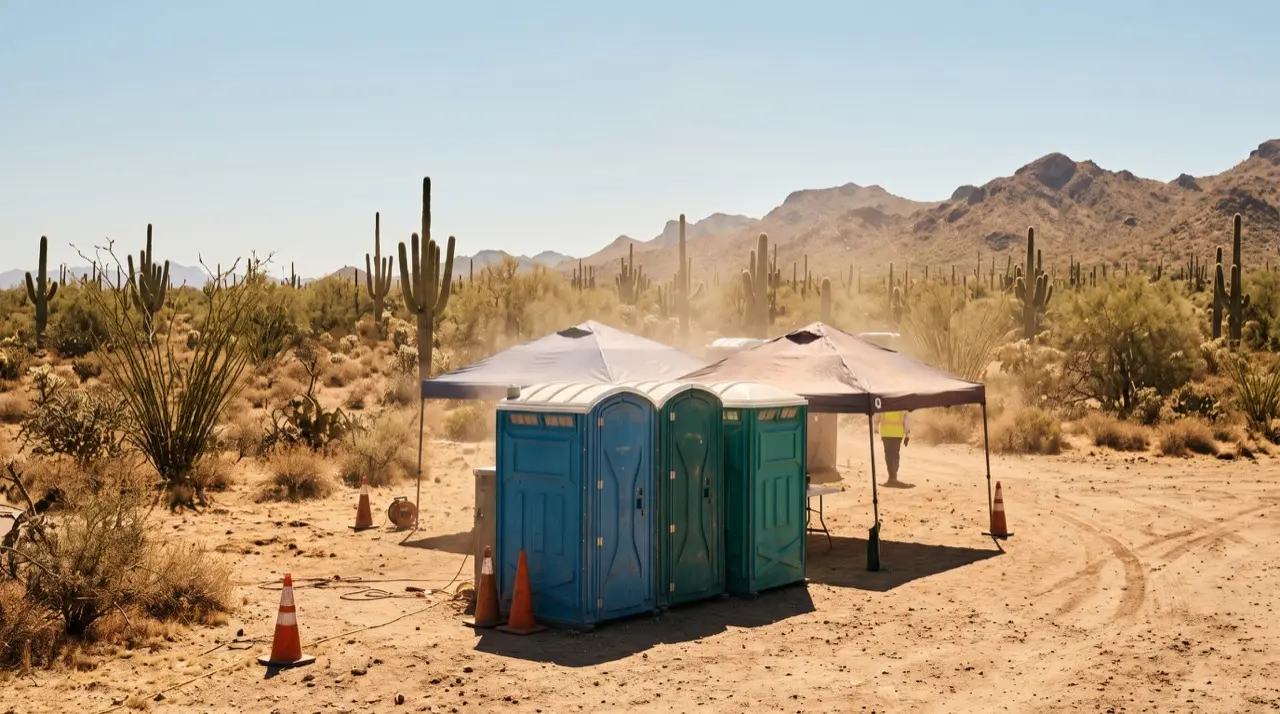
- Shade first. Put units on the shaded side of a building, under trees or beside a temporary shade structure rather than on open asphalt.
- Tighten servicing. A weekly rhythm that worked in spring may be too thin in summer. See servicing and talk through usage when you call.
- Shift the schedule. Evening ceremonies and pre-dawn work starts are easier on everyone. Heavy use clusters before and after shifts, so plan around those peaks.
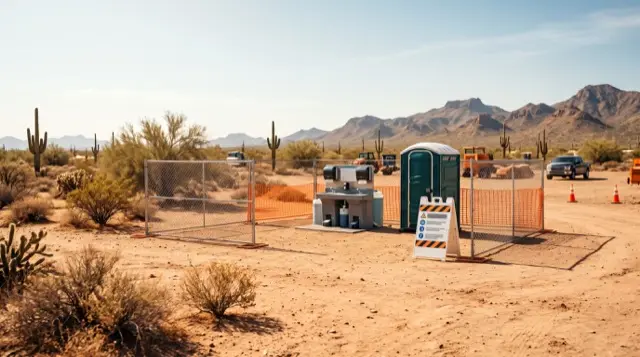
- Add handwashing and water. People wash up and cool off constantly in the heat. A handwashing station is busy all day.
- Shorten the walk. Hot ground and long distances are harder on children, older guests and anyone with limited mobility.
- Price a trailer for long events. A restroom trailer with air conditioning can be worth comparing for weddings or multi-hour events. Ask whether cooling is included and what power it needs.
A rough seasonal calendar
Late October through April is the comfortable stretch and the busy one: festivals, spring training, weddings and winter-visitor events compete for dates. May and September are transition months where mornings are fine and afternoons are not. June through August is the heart of the heat, with monsoon moisture arriving after mid-June. Booking early helps in the busy season, and calling early helps in the extreme season because shade, timing and servicing can be planned together.
Monsoon season
The Arizona monsoon runs officially from June 15 to September 30. Typical hazards are lightning, strong gusts, blowing dust, heavy downpours and flash flooding. Before an outdoor event or job, think about the following.
- Stay out of washes and low spots. Water can arrive quickly, even when it is not raining at your location.
- Choose stable, level ground. Soft or sloped spots become hazards in wind and wet.
- Plan for dust storms. Haboob-type dust events can cut visibility on roads and across open sites in minutes, so build in delivery and pickup margins.
- Have a lightning plan. Staff and guests should know to leave exposed areas, including portable units, when lightning is close.
- Tell us about conditions. If your road or lot washes out or turns to mud, say so when you call so placement and access can be discussed.
Cold nights at elevation
Flagstaff, Prescott and other high-elevation areas can drop below freezing outside the dead of winter. Units that hold water deserve a conversation about freeze protection, and snow or ice can limit road access. Ask about winter-ready planning if your dates fall between fall and spring.
Outdoor work in the heat
Crews working through the summer should combine sanitation and heat planning. Placing units and handwashing near a shaded, well-supplied rest area makes both easier to supervise. See the construction sanitation guide for the regulatory basics, and remember that regulations and employer policies on heat change, so check current guidance with your safety manager.
Remote and trailhead sites
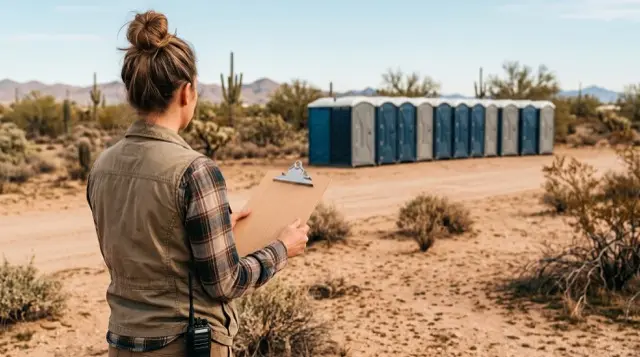
Desert sites add distance, dust and no shade. The trailhead and off-road guide covers access, washes and servicing for those locations, and wedding hosts can see the wedding planning guide for evening-ceremony strategies.
A quick checklist before you call
- Where will the units sit, and will they get afternoon sun?
- How will the truck reach the spot if the ground is wet?
- When are the use peaks, and can you shift them to cooler hours?
- Do you need extra servicing, lighting or handwashing?
- What is the plan if a storm arrives mid-event?
Mention your location, hours and the site's shade when you call for a quote, and we will help you recommend a sensible setup.
Last updated October 13, 2026. This guide is general information, not legal, engineering or regulatory advice.